


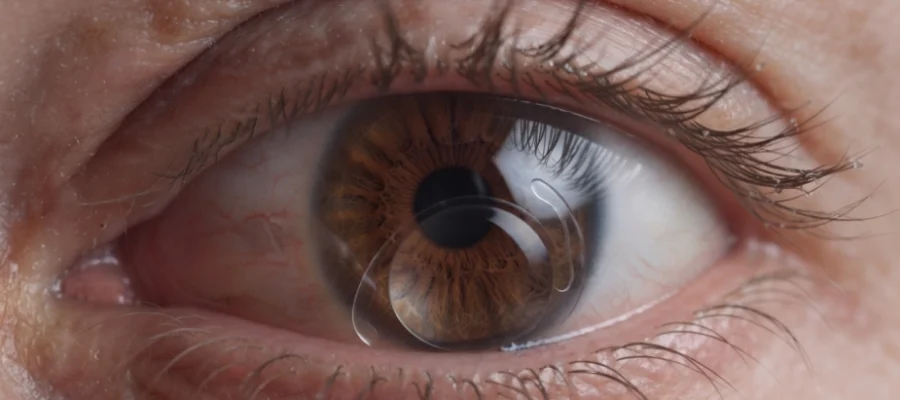
What Is Intraocular Lens Dislocation?
Intraocular lens dislocation is a condition in which the artificial lens, also known as an intraocular lens (IOL), implanted during cataract surgery moves away from its intended position. Although intraocular lens dislocation is uncommon, it can significantly affect the quality of vision.
Normally, the lens is secured inside a thin membrane called the lens capsule. However, weakening of the capsule or damage to the supporting tissues over time may cause the lens to move out of position. The severity of the condition may range from a slight displacement to complete dislocation of the lens.
What Are the Symptoms of Intraocular Lens Dislocation?
The symptoms of intraocular lens dislocation usually appear as a deterioration in visual quality. People with a dislocated intraocular lens may experience blurred vision, double vision, fluctuating vision and glare or light reflections.
Some patients report a sudden change in their vision or a loss of visual clarity. In advanced cases, severe displacement of the lens may result in vision loss. Patients may also describe a sensation of movement or the feeling of a foreign object inside the eye.
The symptoms may gradually worsen. Therefore, early detection and medical evaluation are important.
Why Does an Intraocular Lens Become Dislocated?
The most common cause of intraocular lens dislocation is weakening of the capsule and the supporting fibres that hold the lens in place. As these supporting structures become loose over time, the intraocular lens may move away from its original position.
Age-related tissue weakness, eye trauma, changes in intraocular pressure and certain eye diseases may contribute to this condition. The risk is particularly higher in people with conditions such as pseudoexfoliation syndrome.
Technical difficulties or complications that occur during cataract surgery may also increase the likelihood of lens dislocation later in life.
Can a Dislocated Intraocular Lens Be Repositioned?
In many cases, a dislocated intraocular lens can be repositioned and secured. The preferred approach is usually to preserve the existing lens and place it back into the correct position.
When the lens is structurally intact and suitable for continued use, it can be secured inside the eye using specialised surgical techniques. During this procedure, the lens may be fixed to the capsule or to alternative supporting structures inside the eye using microsutures.
However, when the lens is damaged or cannot be secured in a suitable position, it may need to be removed and replaced with a new intraocular lens. The most appropriate method depends on the patient’s eye structure and the condition of the existing lens.
How Is Intraocular Lens Exchange Performed?
Intraocular lens exchange is a surgical procedure in which a dislocated or non-functioning lens is removed and replaced with a new lens. The procedure is generally performed using highly precise microsurgical techniques.
During surgery, the existing lens is carefully removed. A new lens suitable for the patient’s eye structure is then selected and implanted either inside the lens capsule or in an alternative fixation area.
How Long Does Intraocular Lens Dislocation Surgery Take?
Intraocular lens dislocation surgery generally takes between 20 and 60 minutes. The duration of the procedure may vary depending on the condition of the lens, the degree of dislocation and the surgical technique being used.
A straightforward lens repositioning procedure may be completed more quickly, while lens exchange or complex fixation procedures may take longer.
The surgery is generally performed under local anaesthesia, and the patient can usually be discharged on the same day.
Recovery After Intraocular Lens Dislocation Surgery
Recovery after intraocular lens dislocation surgery is generally fast, although careful follow-up is required. Mild stinging, watering and blurred vision during the first few days after surgery may be considered normal.
Using the prescribed eye drops regularly, protecting the eye and maintaining proper hygiene can support the healing process. Vision usually improves significantly within a few weeks.
However, the full recovery period may vary from one patient to another. During this period, patients should avoid heavy lifting, protect the eye from trauma and attend all scheduled follow-up appointments.

When Can Lens Dislocation Occur After Cataract Surgery, and Who Is at Risk?
Intraocular lens dislocation may occur shortly after cataract surgery or may develop several years later. Dislocations that appear during the early postoperative period are generally associated with the surgical procedure.
Late dislocations are usually related to the gradual weakening of the lens capsule and its supporting structures.
Older individuals, people with high myopia, those with a history of eye trauma and patients with connective tissue disorders may have a higher risk. The likelihood of this complication may also be greater in people who have previously undergone eye surgery.
How Is Intraocular Lens Dislocation Diagnosed?
Intraocular lens dislocation is diagnosed through a detailed eye examination. The ophthalmologist evaluates the position of the lens using a slit-lamp biomicroscope and determines whether displacement has occurred.
When necessary, advanced imaging techniques may be used to examine the internal structures of the eye in greater detail. These examinations help determine the degree of displacement and whether treatment is required.
Early diagnosis is essential for creating an appropriate treatment plan. It may help minimise the risk of vision loss and preserve the patient’s quality of life.
What Happens If Intraocular Lens Dislocation Is Left Untreated?
When intraocular lens dislocation is left untreated, it may lead to a serious decline in visual quality over time. As the condition progresses, symptoms such as blurred vision, double vision and image displacement may become more noticeable.
In advanced cases, complete displacement of the lens may place pressure on the retina and potentially lead to permanent vision loss. Complications such as changes in intraocular pressure and inflammation may also develop.
For this reason, treatment should not be unnecessarily delayed in patients who have been diagnosed with intraocular lens dislocation.
What Are the Treatment Options for Intraocular Lens Dislocation?
Treatment for intraocular lens dislocation is planned according to the degree of displacement and the patient’s symptoms. When the dislocation is mild, observation and regular follow-up may be sufficient in some cases.
However, surgical treatment is generally required when the displacement significantly affects vision. Treatment options include repositioning the existing lens or removing it and replacing it with a new intraocular lens.
In some patients, the existing lens can be secured in the correct position. In more advanced cases, implantation of a new lens may be preferred. The treatment method is determined individually for each patient.
How Is Intraocular Lens Dislocation Surgery Performed?
Intraocular lens dislocation surgery may be performed using different techniques depending on the condition of the lens. The purpose of the operation is to restore the lens to the correct position and ensure that it remains stable.
When the existing lens is suitable for continued use, it may be secured inside the eye using specialised suturing techniques. This is a highly precise procedure performed with microsurgical methods.
In some patients, the dislocated lens is removed and replaced with a new intraocular lens. The new lens may be fixed to different supporting structures inside the eye.
The operation is generally performed under local anaesthesia, and patients can usually return to their daily activities within a relatively short period. Following successful surgery, visual quality may improve significantly.
Regular postoperative examinations are important to ensure that the recovery process progresses properly.

Frequently Asked Questions About Intraocular Lens Dislocation
Is Intraocular Lens Dislocation an Emergency?
Intraocular lens dislocation is not always an emergency. However, certain cases may require prompt medical treatment.
When the displacement is mild and does not significantly affect vision, the patient may be monitored for a short period.
Can a Dislocated Intraocular Lens Move Back Into Position on Its Own?
No. A dislocated intraocular lens does not usually return to its correct position on its own. Because intraocular lens dislocation is an anatomical problem, it is not expected to resolve spontaneously over time.
Can Glasses or Contact Lenses Correct a Dislocated Intraocular Lens?
Glasses and contact lenses cannot physically correct the position of a dislocated intraocular lens. Since intraocular lens dislocation is a structural problem, optical devices cannot move the lens back into its correct position.
Can an Intraocular Lens Become Dislocated Again After Treatment?
Following treatment for intraocular lens dislocation, the lens remains permanently stable in most patients, and visual quality improves significantly.
However, intraocular lens dislocation may recur in certain cases. The risk may be higher in patients whose supporting tissues inside the eye are particularly weak.
Can Multifocal or Trifocal Intraocular Lenses Become Dislocated?
Multifocal and trifocal intraocular lenses can theoretically become dislocated, although this is quite rare.
Like standard intraocular lenses, multifocal and trifocal lenses are implanted inside the lens capsule and depend on the same anatomical supporting structures.
Is Intraocular Lens Dislocation the Same as Natural Lens Dislocation?
Intraocular lens dislocation and natural lens dislocation are two different conditions with different causes.
Intraocular lens dislocation occurs when an artificial lens implanted following cataract surgery moves away from its intended position.
Is Intraocular Lens Dislocation the Same as Posterior Capsule Opacification?
Intraocular lens dislocation and posterior capsule opacification, sometimes referred to as secondary cataract, are frequently confused but are completely different conditions.
Intraocular lens dislocation involves the physical displacement of the implanted lens and generally requires surgical treatment.